DISTANCE
Flange focal distance
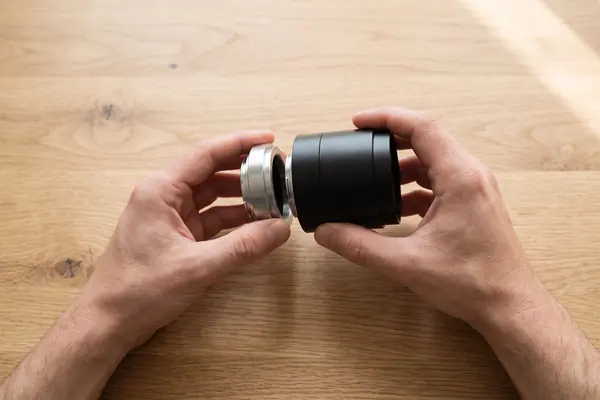
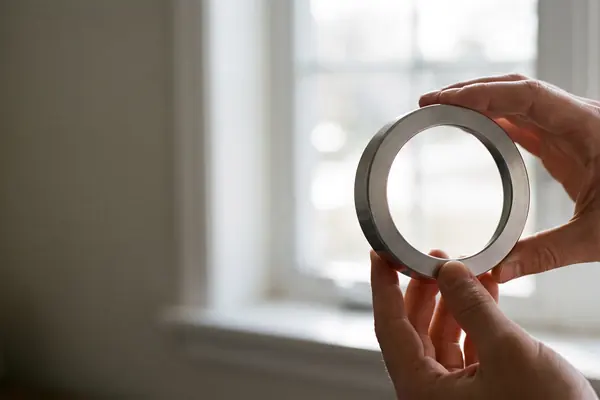
The gap from the mounting flange to the sensor. It must be made to hundredths of a millimeter, or lenses will not focus accurately.
Check an adapter canonmirrorless
00LENS MOUNTS, EXPLAINED
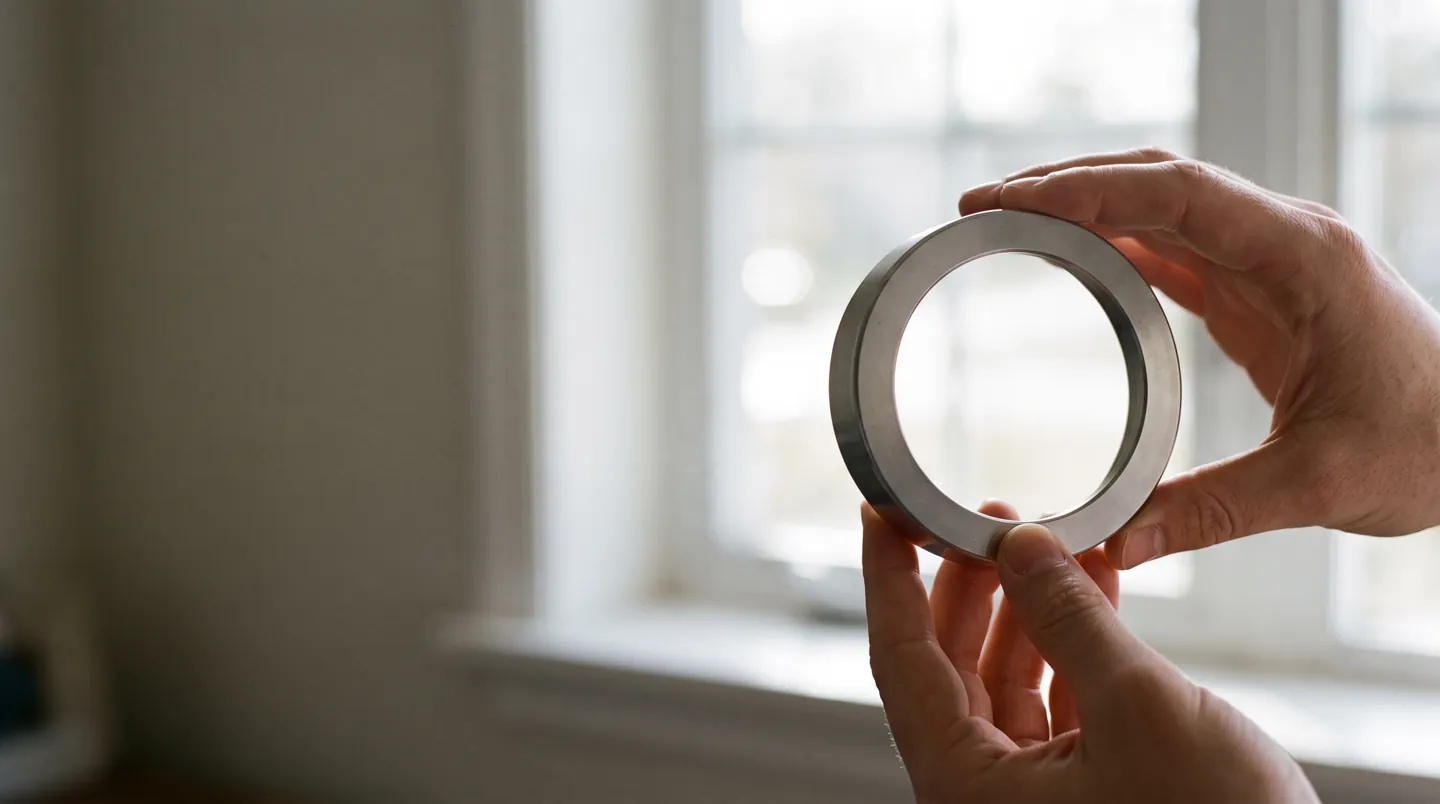
Every lens is built to sit a set distance from the sensor.
That distance, the flange focal distance, is fixed for each mount. Taking the mirror out made it much shorter, which is why so many older lenses can now be adapted with a plain spacer ring.
Check an adapter01Principles
02THE SHORT ANSWER
A lens focuses at infinity only at its own distance.
An adapter can add space, not remove it.
DISTANCE
The gap from the mounting flange to the sensor. It must be made to hundredths of a millimeter, or lenses will not focus accurately.
Check an adapterADAPTERS
A lens from a longer-flange system needs only a spacer on a shorter-flange body. Going the other way needs an optical adapter, or infinity is lost.
Before you buyELECTRONICS
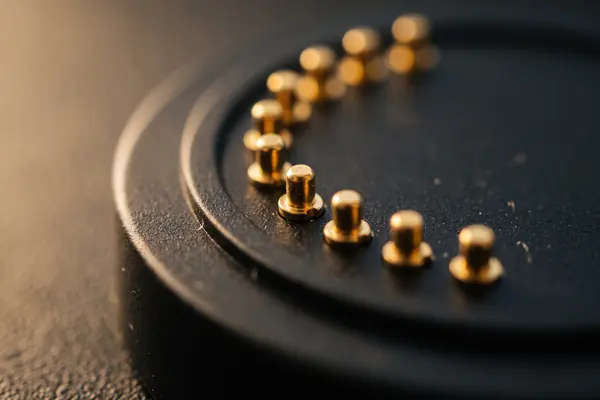
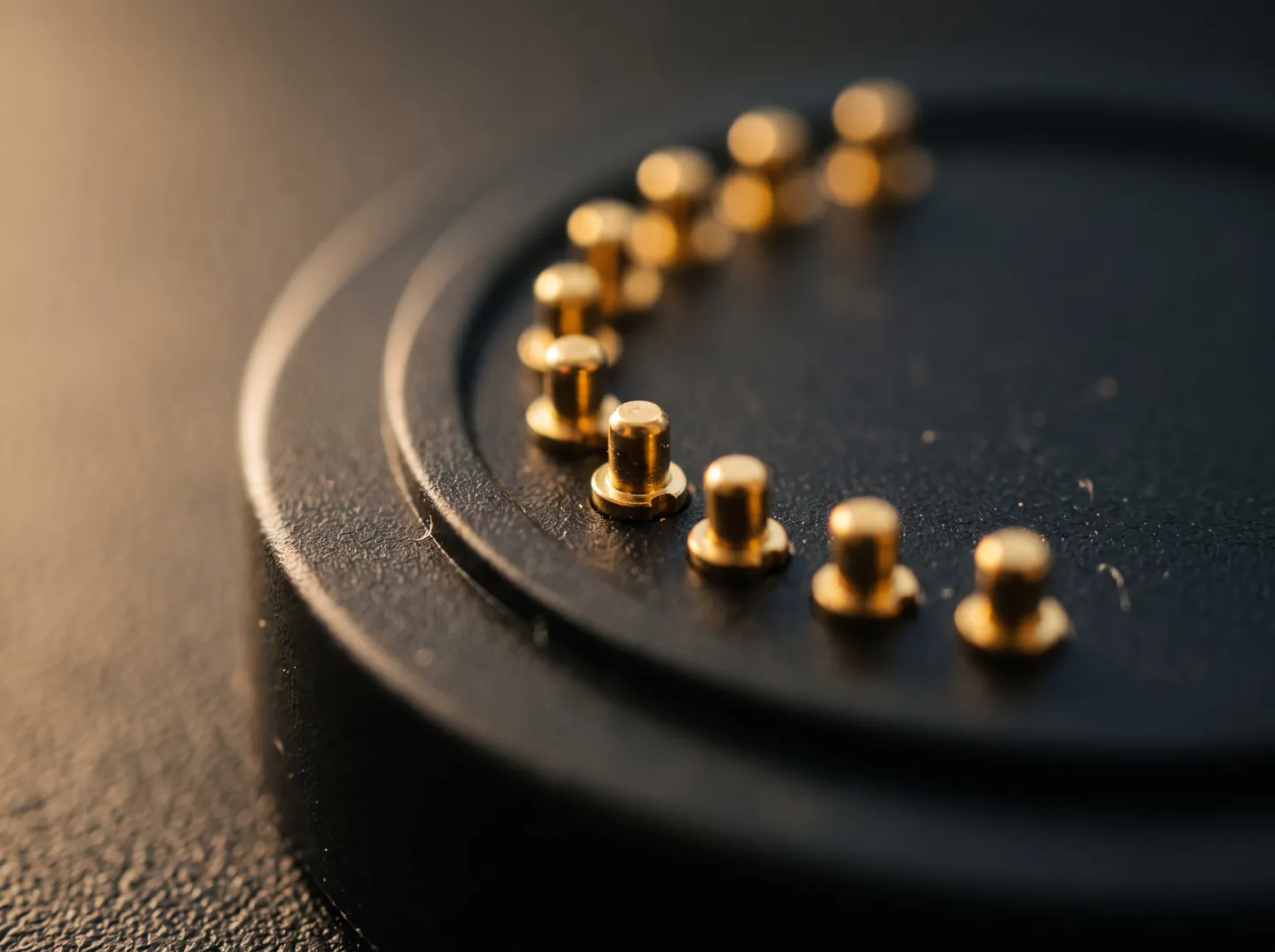
Modern mounts pass aperture and focus signals through contacts. Cornell's mount list notes most conversions lose autofocus, auto exposure or both.
See the numbers03A QUICK ADAPTER CHECK
Pick a pairing to see whether a simple adapter can keep infinity focus. The bar shows how hard the job is.
Mount distances and throat sizes vary: check the figures for your own lens and body before buying.
04TWO NUMBERS WORTH KNOWING
Typical distances for full-frame mounts,
from the published table of mount registers.
16–20 mm
Flange to sensor, current full-frame mounts
Wikipedia's flange focal distance table puts current full-frame mirrorless mounts between 16 mm and 20 mm. With no reflex mirror to swing, the lens can sit much closer.
MIRRORLESS · FULL FRAME
42–47 mm
Flange to sensor, common SLR mounts
Most 35 mm SLR mounts in the same table sit between 42 mm and 47 mm, leaving room for the mirror. The shared M42 screw thread, used since 1949, is 45.46 mm.
SLR · 35 MM FILM AND DIGITAL
Removing the mirror box was a design aim: the Micro Four Thirds standard cut its flange back to about half that of the earlier Four Thirds SLR system. The first mirrorless camera went on sale in Japan in October 2008.
05FOUR CHECKS BEFORE YOU BUY
An adapter is a precise spacer. These checks come straight from how flange distance works.
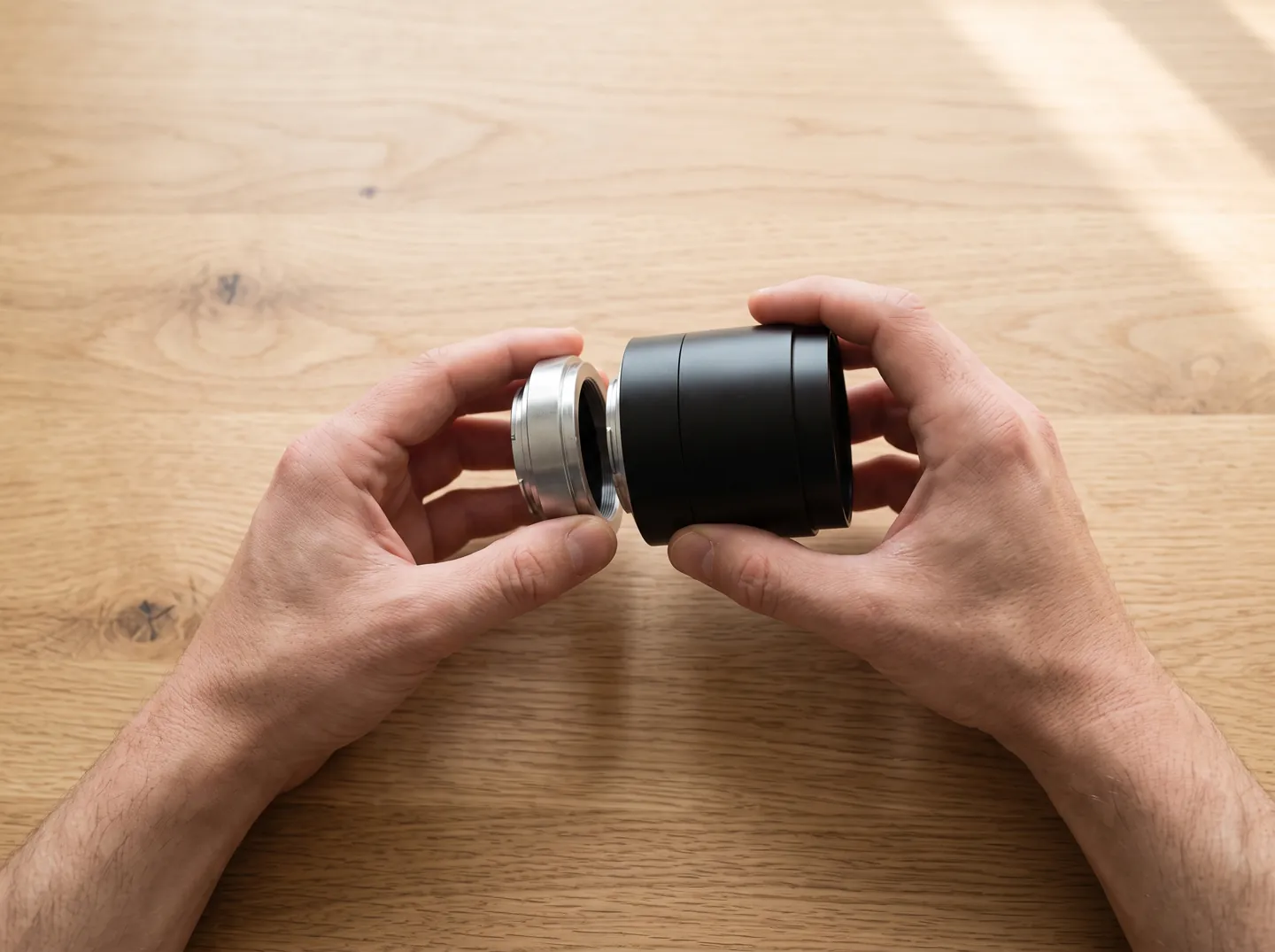
Look up the flange focal distance of the lens mount and the body. The lens's figure should be larger, by more than a thin sliver.
The lens thread or bayonet must fit inside the body's mount. Close distances can still fail on diameter.
Plain adapters pass no signals. If you rely on autofocus or auto exposure, look for an active adapter and expect limits.
Optical adapters reduce the light reaching the sensor and add a crop. Plain non-optical adapters are preferred where they work.
06WHY PRECISION MATTERS
Flange focal distance is a fixed mechanical specification. Even small deviations can stop a lens reaching accurate focus across its range, so both the body and any adapter must be made to tight tolerances.
That is also why close pairs of mounts are awkward. Cornell's mount list gives the example of a 0.5 mm difference, which might be too thin to make a usable adapter, and notes the lens thread or bayonet must fit entirely inside the body's mount.
07Questions
The distance from the mounting flange, the interlocking metal rings on the body and the back of the lens, to the film or sensor plane. Each lens mount has its own fixed figure.
Without a reflex mirror their flange distances are short, about 16 to 20 mm for full-frame mounts. Lenses made for longer distances can be held further out with a simple spacer and still focus to infinity.
Not with a simple adapter. The lens would need to sit closer to the sensor than the SLR mount allows, so an adapter needs a corrective lens, which loses light and adds a crop, or it will not focus far away.
Sometimes, with an active adapter that carries electronic connections. Cornell's mount list notes most conversions sacrifice autofocus, automatic exposure or both, and some lose metering.
Yes. The specification is set to hundredths of a millimeter, and Cornell's list suggests a 0.5 mm gap between two mounts may be too thin for a usable adapter.
08Sources
ABOUT THIS NAME
canonmirrorless.com is part of the DoodleSale portfolio. It isn't in an auction right now, but you can ask about leasing it.